
In 2026, the brands that rise above the noise will be those who embrace performance creative, uniting data-driven insights with bold imagination. The digital landscape is shifting quickly, and the ability to blend analytics with creativity will separate leaders from the rest.
This guide breaks down proven frameworks and strategies for performance creative, showing you how to achieve measurable growth in ecommerce and DTC. Expect real-world examples, data-backed tactics, and clear steps to help your brand outperform competitors.
Are you ready to master the art and science of marketing? Dive in to discover actionable approaches for building, testing, and optimizing creative that delivers results.
What is Performance Creative? Defining the 2026 Standard
Performance creative is a data-driven, outcome-focused approach to advertising and content that prioritizes measurable business results. Unlike traditional creative strategies, which often emphasize brand awareness or visual storytelling alone, performance creative is built to deliver clear, quantifiable outcomes like conversions, return on ad spend, and lower customer acquisition costs. For marketers aiming to maximize impact in 2026, mastering performance creative is essential.
To put it simply, performance creative blends the art of compelling content with the science of analytics. Every asset is designed, tested, and optimized to drive a specific action, whether it’s a sale, sign-up, or repeat engagement. This approach is at the core of modern performance marketing strategies, ensuring that creative decisions are always tied to real-world results.
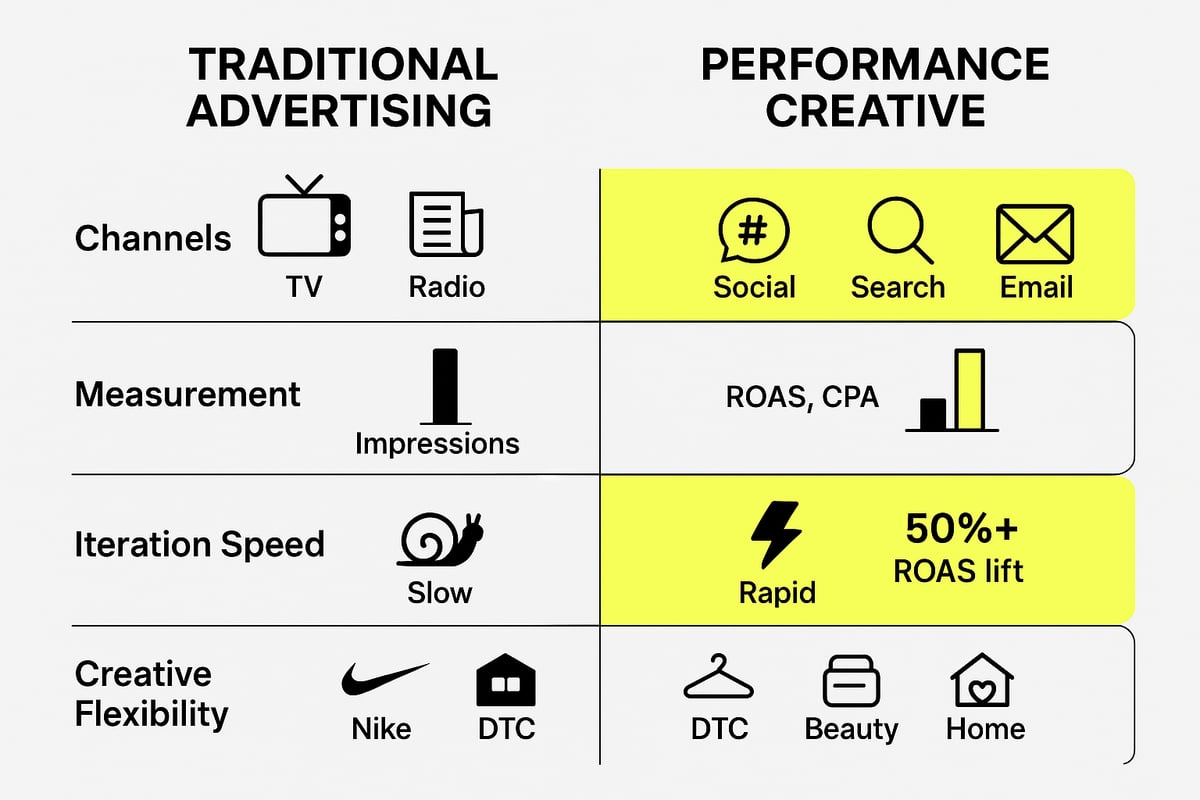
Let’s break down the key differences between performance creative and traditional advertising. Traditional campaigns often rely on mass media channels like TV, print, or radio, guided by intuition and broad messaging. Results can be hard to measure, and creative updates are infrequent. In contrast, performance creative is digital-first, hyper-targeted, and highly measurable. Brands can launch hundreds of creative variants, track performance in real-time, and rapidly iterate based on what works. For example, Nike’s iconic “Just Do It” campaign built brand equity over decades, whereas today’s TikTok UGC campaigns focus on driving immediate conversions and trackable ROI.
Core components form the backbone of any performance creative strategy:
- Audience targeting: Use data to segment and reach the most valuable customers.
- Iterative testing: A/B and multivariate tests quickly identify top-performing creative.
- Creative flexibility: Adapt messaging, visuals, and formats for each platform and audience.
- Rapid optimization: Leverage analytics dashboards to refine creative in real time.
Here’s a step-by-step process to get started:
- Gather audience insights from analytics platforms.
- Set clear goals and KPIs for each campaign.
- Develop creative assets tailored for each channel.
- Test variations and monitor performance.
- Optimize based on data and scale top performers.
Why does performance creative matter so much in 2026? The digital landscape is more saturated than ever, and ad costs keep rising. Brands are under pressure to prove ROI and justify every dollar spent. Performance creative delivers accountability and agility. For example, Greenpark Sports App used performance creative to triple their ad budget efficiency and significantly lower cost per acquisition. Similarly, Hurom’s UGC-driven campaigns cut CPAs by 65 percent and achieved 2.5x ROAS, according to inBeat.
This approach is especially relevant for ecommerce, fashion, beauty, wellness, and home brands. Performance creative is now the baseline for growth-focused marketing teams, ensuring every campaign is optimized for measurable success.

Performance Creative vs. Traditional Advertising: The Evolution
In today’s marketing landscape, brands face a crucial decision: stick with traditional advertising or embrace performance creative. Understanding the evolution between these two approaches is essential for teams aiming to drive measurable growth in 2026.
Key Differences and Why They Matter
Traditional advertising relies on mass media, intuition, and broad messaging. Campaigns often run on TV, print, or radio, where measuring direct response is challenging. Brands may spend months planning a campaign, only to wait weeks for vague results like “brand lift” or “reach.”
Performance creative, in contrast, is digital-first and hyper-targeted. Brands leverage platforms like Meta, TikTok, Google, and email to reach specific audiences. Every creative asset is tied to measurable outcomes, such as conversions or return on ad spend (ROAS).
| Aspect | Traditional Advertising | Performance Creative |
|---|---|---|
| Channels | TV, print, radio | Social, search, email, programmatic |
| Measurement | Impressions, awareness | CPA, ROAS, conversion rate |
| Flexibility | Limited, slow to change | Rapid iteration, test-and-learn |
| Personalization | Broad, one-size-fits-all | Tailored, dynamic |
Performance creative empowers brands to quickly test headlines, visuals, and calls-to-action, then double down on what works. For example, instead of launching a single TV spot, a fashion brand can run multiple video ad variants on Instagram, monitor real-time results, and optimize for highest conversions.
Transitioning to performance creative is not without its challenges. Teams must learn to analyze data, move faster, and collaborate across creative and analytics. However, the potential for rapid revenue growth and cost savings is significant. Brands that embrace low-cost, high-return tactics are seeing measurable improvements in ROI.
Real-World Brand Examples
Fashion brands have shifted from static lookbooks in magazines to A/B tested video ads on Instagram. One DTC fashion retailer ran two creative versions—one with lifestyle shots, one with product-only images. The lifestyle-focused ad delivered a 50% higher conversion rate and a 42% lower CPA.
In the beauty sector, influencer-led user-generated content (UGC) campaigns on TikTok are outperforming polished studio shots. A leading skincare brand partnered with micro-influencers, optimizing creative in real time based on engagement data. The result: a 65% drop in CPA and a 2.5x increase in ROAS.
Home and living brands are using dynamic creative for retargeting on Meta. By segmenting audiences based on browsing behavior, these brands serve highly relevant ads—such as showing a kitchenware set to users who viewed cookware pages. This approach led to a 53% lift in ROAS compared to generic campaigns.
Lessons from these brands are clear:
- Test multiple creative angles, not just one.
- Use data to guide decisions, not gut instinct.
- Iterate quickly and share learnings across teams.
Brands that switched from traditional to performance creative consistently report higher returns, better audience engagement, and the agility to stay ahead in a fast-changing market.
The Performance Creative Framework: Step-by-Step Execution for 2026
Unlocking growth in 2026 requires a repeatable, data-driven approach to performance creative. The following framework distills proven strategies into six actionable steps, each tailored for brands aiming to blend analytics with creative excellence. Let’s break down how leading ecommerce, fashion, beauty, wellness, and home brands are executing performance creative for measurable results.
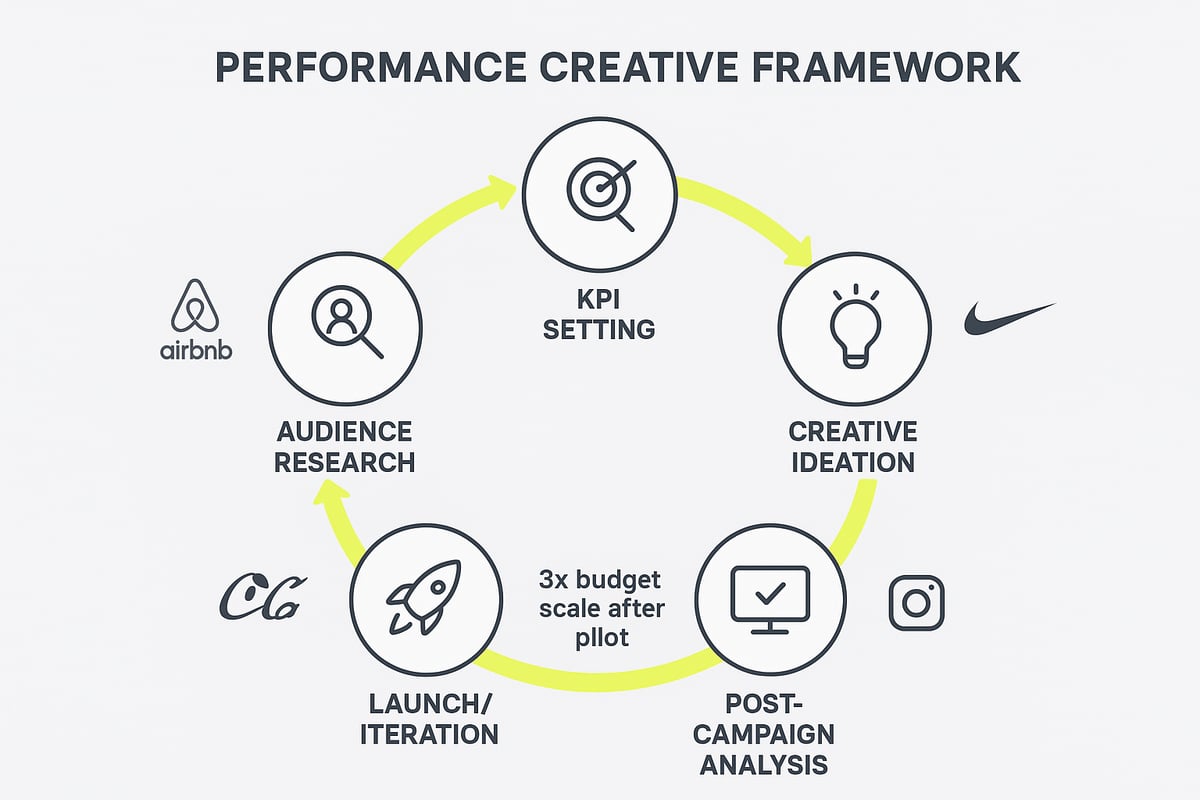
Step 1: Audience Research & Data Gathering
The foundation of performance creative is precise audience understanding. Start by collecting first-party and third-party data to identify your most valuable segments. Tools like Google Analytics, Meta Insights, and TikTok Analytics enable you to dig deep into demographics, behaviors, and interests.
For example, a fashion retailer might segment audiences by age, gender, and style preference, tailoring creative to each group. Beauty brands often leverage purchase data to pinpoint high-LTV customers for targeted campaigns.
To sharpen your segmentation, explore data-driven audience targeting tips for practical steps that improve targeting accuracy and creative relevance.
Actionable steps:
- Gather data from web analytics, CRM, and social platforms.
- Build detailed audience personas.
- Map creative formats to each segment’s preferences.
Performance creative thrives when you know exactly who you’re speaking to.
Step 2: Setting Clear Goals & KPIs
Every performance creative initiative must start with well-defined goals. Align creative concepts with business objectives, such as driving sales, generating leads, boosting retention, or increasing engagement.
Set measurable KPIs for each campaign. Common metrics include CPA, CTR, ROAS, and conversion rate. For instance, a beauty brand might aim to reduce CAC by 20% through iterative creative testing, while a home decor company could target a 2x lift in ROAS from retargeting ads.
Tips for success:
- Use historical data to set realistic benchmarks.
- Prioritize a small set of KPIs to maintain focus.
- Communicate goals clearly to all creative and media stakeholders.
Performance creative is only as strong as the clarity of its objectives.
Step 3: Creative Ideation & Asset Development
With your audience and goals defined, it’s time to brainstorm and develop assets. Foster collaboration between creative and media teams to ensure ideas are both imaginative and performance-driven.
Actionable steps:
- Run joint ideation workshops.
- Use storyboards for video, concise copy for direct response, and eye-catching visuals for scroll-stopping ads.
- Ensure brand consistency while adapting assets for each channel.
A home decor brand, for example, may A/B test lifestyle imagery versus product-only shots to see which drives higher engagement. Fashion retailers might alternate between influencer-led reels and studio photography.
Performance creative demands both creativity and adaptability in asset production.
Step 4: Testing & Optimization (A/B & Multivariate)
Testing is the engine of performance creative. Launch A/B tests on headlines, visuals, CTAs, and formats to identify top performers. For more complex campaigns, multivariate testing uncovers winning combinations across multiple variables.
Tools like Google Optimize, Meta Experiments, and TikTok Creative Center streamline the process. A wellness brand, for example, could test three video hooks and two CTA variants, quickly learning which resonates best. Data from inBeat shows that ongoing UGC testing reduced CAC by 36% for Hurom.
How to optimize:
- Test one variable at a time for clarity.
- Review results weekly and iterate rapidly.
- Scale successful creatives while pausing underperformers.
Performance creative is about learning fast and acting even faster.
Step 5: Launch, Monitor, and Iterate
After testing, launch your best-performing creatives in live campaigns. Monitor performance in real time using custom dashboards, tracking all key KPIs.
For instance, a DTC brand might start with a $500 daily spend on a pilot, then scale up to $10,000 when the creative proves effective. Quick pivots are essential—shift budget to what works, pause what doesn’t.
Tips for this phase:
- Set up alerts for major KPI shifts.
- Maintain open communication between creative and media teams.
- Iterate on creative weekly based on fresh data.
Performance creative is an ongoing loop of launch, learn, and optimize.
Step 6: Post-Campaign Analysis & Knowledge Sharing
The final step is a deep-dive analysis. Review what worked, what failed, and why. This reflection is crucial for continuous improvement in performance creative.
A fashion retailer, for example, might debrief each season’s campaigns, sharing insights on which creatives drove conversions and which fell flat. These learnings inform the next round of ideation, making each campaign smarter than the last.
Best practices:
- Document findings in shared repositories.
- Hold cross-team debriefs to maximize learning.
- Update creative briefs with key takeaways.
Performance creative excellence comes from a cycle of experimentation, analysis, and shared learning.
Data-Driven Decision Making: Analytics, Attribution, and Creative Insights
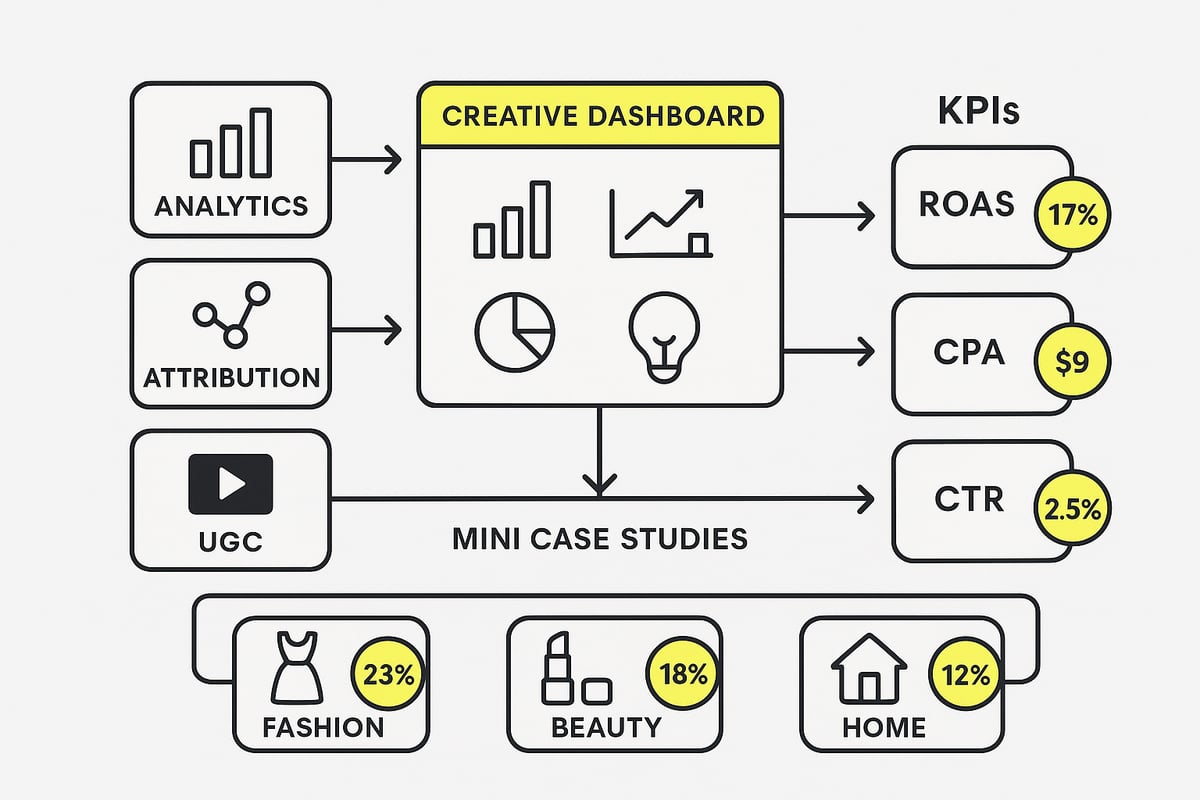
In 2026, the brands leading in performance creative are those that treat data as a creative partner. Every successful campaign now fuses analytics, attribution, and ongoing insights to maximize ROI. Let’s break down how to make data-driven decision making the engine of your performance creative strategy.
The Role of Data in Performance Creative
To unlock performance creative potential, brands must embed data into every step of the process. Start by integrating analytics platforms from day one, ensuring all creative assets are tagged and measured. Attribution modeling is crucial—move beyond last-click to multi-touch or incrementality models for a true picture of impact.
Set up real-time dashboards so teams can monitor performance creative results as they happen. For example, lifestyle brands using TripleWhale track cross-channel attribution to see which creatives drive conversions across Meta, TikTok, and Google.
A recent report on data-driven innovation found that UK brands with robust analytics pipelines see up to 40% faster optimization cycles. This data-centric approach ensures performance creative stays agile and impactful.
Measurement Tools & KPIs That Matter
Choosing the right metrics is essential for measuring performance creative success. Focus on KPIs that align with business goals:
- ROAS (Return on Ad Spend)
- CAC (Customer Acquisition Cost)
- LTV (Lifetime Value)
- CTR (Click-Through Rate)
- Engagement Rate
Use tools like Google Analytics 4, Meta Ads Manager, TikTok Pixel, and Klaviyo for email to gather and visualize these metrics. Set up custom dashboards tailored to creative teams, making it easy to spot winning assets and outliers.
For example, a home and living brand tracks creative performance by segment, quickly reallocating budget to high-ROAS ads. This direct link between analytics and daily decision making gives performance creative a measurable edge.
Creative Optimization Loops: Feedback in Action
Continuous feedback is the lifeblood of performance creative. Establish weekly creative review sessions between media buyers and creative teams. Use performance data to update headlines, visuals, and formats—then test new iterations the following week.
A beauty brand on TikTok reviews ad performance every Friday, swapping out underperforming hooks and doubling down on winning styles. This rapid cycle of review and refinement keeps performance creative fresh and competitive.
Action Steps:
- Schedule weekly creative analysis meetings
- Share dashboards with all stakeholders
- Document learnings for future campaigns
Real-World Results: Brand Case Studies
Top brands prove that data-driven performance creative delivers tangible growth. Hurom, for instance, achieved a 65% lower CPA and 2.5x ROAS using optimized UGC campaigns. Greenpark scaled its budget 3x after creative iteration improved retention and acquisition metrics.
A leading fashion retailer implemented multivariate testing, resulting in a 50% increase in conversion rates within two months. The common thread? These brands use analytics and attribution to inform every creative decision.
By learning from both wins and misses, performance creative teams can refine their approach, maximize ROI, and set new benchmarks for success.
Top Performance Creative Trends for 2026
Navigating the future of performance creative means staying ahead of the curve as technology, consumer behavior, and regulations rapidly evolve. The brands that lead in 2026 will be those that embrace these five trends, blending data-driven insights with bold creative execution.
AI-Powered Creative Production
AI is transforming performance creative by enabling brands to generate, test, and personalize assets at unprecedented speed. In 2026, top ecommerce and DTC brands use generative AI tools to create hundreds of ad variations for micro-targeted campaigns.
How to leverage AI in your creative workflow:
- Identify key audiences and segment creative needs.
- Use AI platforms to auto-generate copy, images, and videos for each segment.
- Rapidly test variants, measuring performance creative results in real time.
- Iterate based on data, refining assets for conversion.
For example, a fashion retailer used AI to produce 200 video ad variations, resulting in a 40% faster testing cycle and a 30% lift in ROAS. For a detailed guide, see AI in ecommerce creative.
UGC and Influencer-Driven Content
User-generated content (UGC) and influencer partnerships are redefining performance creative. In 2026, authenticity trumps polish, especially on platforms like TikTok and Instagram Reels.
Beauty and wellness brands are partnering with micro-influencers to showcase real product experiences. By encouraging customers to create and share their own content, brands see dramatic improvements in CPA and engagement.
Actionable steps:
- Launch UGC contests or campaigns with clear creative briefs.
- Partner with influencers for ongoing, data-driven content creation.
- Monitor performance creative metrics, optimizing daily.
Hurom’s TikTok UGC campaign lowered CPA by 65% and doubled ROAS, proving the measurable value of this approach.
Personalization & Dynamic Creative
Performance creative in 2026 is hyper-personalized and dynamic, adapting in real time to user behavior. Brands use tools like Dynamic Product Ads and personalized email flows to deliver the right message at the right moment.
A home and living brand, for example, segments audiences by browsing history, serving tailored creatives for each segment. This approach consistently improves conversion rates and increases customer lifetime value.
Step-by-step:
- Capture user data from site, email, and ads.
- Build creative templates that swap out products, messaging, or offers based on intent.
- Test and optimize each variant, tracking performance creative KPIs.
Cross-Channel Consistency & Omnichannel Testing
With consumers moving seamlessly across platforms, performance creative must be consistent yet channel-optimized. Brands in fashion and lifestyle sectors are repurposing high-performing TikTok ads for Meta Stories and Pinterest Video Ads, maintaining brand voice while adapting format and messaging.
Best practices:
- Identify top-performing creatives on one channel.
- Adapt visuals, copy, and CTA for each platform’s unique requirements.
- Test performance creative across channels, measuring ROAS and engagement.
A DTC brand achieved a 50% lift in cross-channel ROAS by implementing a unified creative testing framework.
Compliance, Privacy, and Ethical Considerations
As privacy regulations become stricter, performance creative teams must prioritize compliance without stifling innovation. Health and wellness brands, in particular, navigate GDPR and CCPA while delivering effective creative.
Key steps for compliance:
- Stay updated on legal requirements for each region and platform.
- Use consent management tools to capture and store user data ethically.
- Review all creative assets for claims and disclosures before launch.
By embedding compliance checks into the creative workflow, brands avoid costly penalties while maintaining high-performing campaigns.
Actionable Strategies for Ecommerce & DTC Brands
To thrive in 2026, ecommerce and DTC brands must turn performance creative into a repeatable growth engine. The following strategies break down how to build high-impact teams, structure briefs, scale creative, allocate resources, and avoid costly pitfalls. Each step is grounded in real-world examples and actionable insights.
Building High-Performance Creative Teams
A high-performing team is at the heart of every successful performance creative strategy. Start by ensuring collaboration between creative, media, analytics, and brand stakeholders. Weekly sprints, like those at leading DTC brands, foster rapid ideation and feedback.
Invest in ongoing training so every team member understands both the art and science of performance creative. Encourage data literacy and make sure everyone is fluent in analytics tools and creative best practices. According to AI's Role in 2026 Marketing, integrating AI into your team’s workflow can accelerate asset production and insight generation.
Creative Briefs That Drive Results
The foundation of performance creative is a clear, data-rich brief. Structure briefs to align on audience, goals, messaging, and KPIs. Include recent performance data and examples of what works.
For example, a beauty brand that shares winning creative assets in every new brief saw a 30% faster creative turnaround. Always update briefs with learnings from recent campaigns, ensuring your team iterates based on real outcomes. This creates a feedback loop that sharpens creative output over time.
Scaling Winning Creative Across Channels
Once you identify a high-performing creative, adapt it for other channels to maximize impact. Start by analyzing which formats resonate—Instagram Reels, Pinterest Video Ads, or TikTok UGC.
Maintain brand consistency, but tailor each asset to platform-specific requirements. For instance, a home brand repurposed Instagram content into Pinterest Video Ads and saw a 40% lift in engagement. For more on scaling and optimizing, see these Performance Marketing Strategies for 2026.
Budgeting and Resource Allocation
Allocate budget strategically to fuel creative testing, production, and scaling. Leading fashion brands dedicate 30% of their advertising spend to creative experimentation, ensuring a steady pipeline of fresh ideas.
Balance your investment between creative development and media buying. Use performance data to reallocate funds toward top-performing assets. Set aside resources for AI tools and analytics platforms that streamline your performance creative process.
Avoiding Common Pitfalls & Maximizing ROI
Combat creative fatigue by regularly refreshing your ads and testing new hooks. Over-reliance on “best practices” can limit innovation—test everything, even unconventional ideas.
A wellness brand discovered a surprising new creative angle that outperformed industry benchmarks by 20%. Use dashboards to track results, and quickly phase out underperforming assets. This disciplined approach ensures your performance creative strategy consistently delivers measurable ROI.
The Future of Performance Creative: Skills, Tools, and Mindset for 2026 and Beyond
To thrive in the rapidly evolving world of performance creative, brands must prepare for a future where data, technology, and creativity are inseparable. As digital experiences diversify, success hinges on building teams equipped with in-demand skills, leveraging advanced tools, and embracing a mindset of constant innovation.
The Evolving Skillset
Performance creative teams in 2026 will need a blend of analytical and creative abilities. Data literacy is foundational, enabling creative professionals to interpret campaign reports, spot trends, and identify growth opportunities.
Creative agility is critical, allowing teams to pivot quickly based on results. Cross-functional communication skills bridge the gap between creative, media, and analytics teams, ensuring unified strategy. For example, a leading fashion retailer recently restructured their team, integrating media buyers with designers and analysts to boost campaign agility. In the beauty sector, brands like Glossier have invested in upskilling creative staff on data tools, resulting in faster, more effective campaign iterations.
Tools That Will Define 2026
The next wave of performance creative will be powered by advanced technology. AI-driven analytics platforms and automated creative optimization tools are becoming standard. Integrated attribution models help teams measure what truly drives conversions across channels.
Generative AI is transforming creative production, enabling brands to quickly produce and personalize vast libraries of assets. According to recent research, almost 90 percent of advertisers plan to use generative AI in video ads, reflecting the shift toward scalable, data-informed content creation. Home and living brands are leveraging these tools to test hundreds of creative variants in days, not weeks.
| Tool/Platform | Function | Example Use Case |
|---|---|---|
| AI Analytics | Predictive insights | Trend forecasting |
| Automated Optimization | Real-time creative swaps | Dynamic ad personalization |
| Attribution Platforms | Cross-channel measurement | Multi-touch ROAS reporting |
Mindset Shifts for Creative Teams
To maximize performance creative, teams must foster a culture of experimentation and rapid iteration. Encourage learning from each campaign, whether it succeeds or fails. DTC brands leading in performance creative hold weekly creative reviews, sharing both wins and losses to refine their approach.
Adopt a test-and-learn framework: set hypotheses, run controlled tests, analyze outcomes, and apply insights to future efforts. For instance, a wellness brand increased their ROAS by 40 percent after instituting biweekly creative sprints, empowering team members to propose bold ideas and quickly iterate on feedback.
Preparing for the Future: Actionable Steps
Looking ahead, brands should invest in training, technology, and processes that support performance creative excellence. Here is a checklist to future-proof your team:
- Upskill in data analytics and creative software
- Deploy AI-powered tools for scalable content production
- Build agile, cross-functional teams
- Integrate brand storytelling with measurable performance goals
- Explore new channels like AR, VR, and voice to stay ahead
Fashion and beauty leaders are already piloting immersive AR experiences, while home brands are testing voice-driven shopping. By staying curious, agile, and data-driven, your team will be poised to lead as performance creative becomes the backbone of modern marketing.
As you’ve seen throughout this guide, mastering the balance between creative vision and data-driven strategy is what sets high-performing ecommerce brands apart in 2026. If you’re ready to elevate your brand’s creative approach, leverage proven frameworks, and see measurable growth across every channel, we’re here to help. At Good Karma Agency, we specialize in turning insights into action—combining powerful storytelling with real-time performance optimization. Let’s connect to explore how we can drive your next big win together.
Contact us


