
In 2026, the digital landscape is evolving faster than ever, making it increasingly difficult for brands to capture attention and drive growth. The competition is fierce, and only those who adapt to the latest digital marketing and web design advancements will thrive.
This guide delivers the most current strategies for digital marketing and web design, tailored to help your brand outperform the rest. You will gain insight into emerging trends, proven frameworks, and actionable tactics, all backed by real-world examples from top ecommerce brands.
Prepare to discover practical steps you can implement immediately to future-proof your online presence and stand out in the crowded digital marketplace.
The 2026 Digital Marketing Landscape: Trends and Consumer Behaviors
Navigating the digital marketing and web design landscape in 2026 means understanding a market that is more dynamic, data-driven, and consumer-centric than ever before. Brands must keep pace with shifting behaviors and technological advances to stay relevant and competitive.
Shifting Consumer Expectations and Behaviors
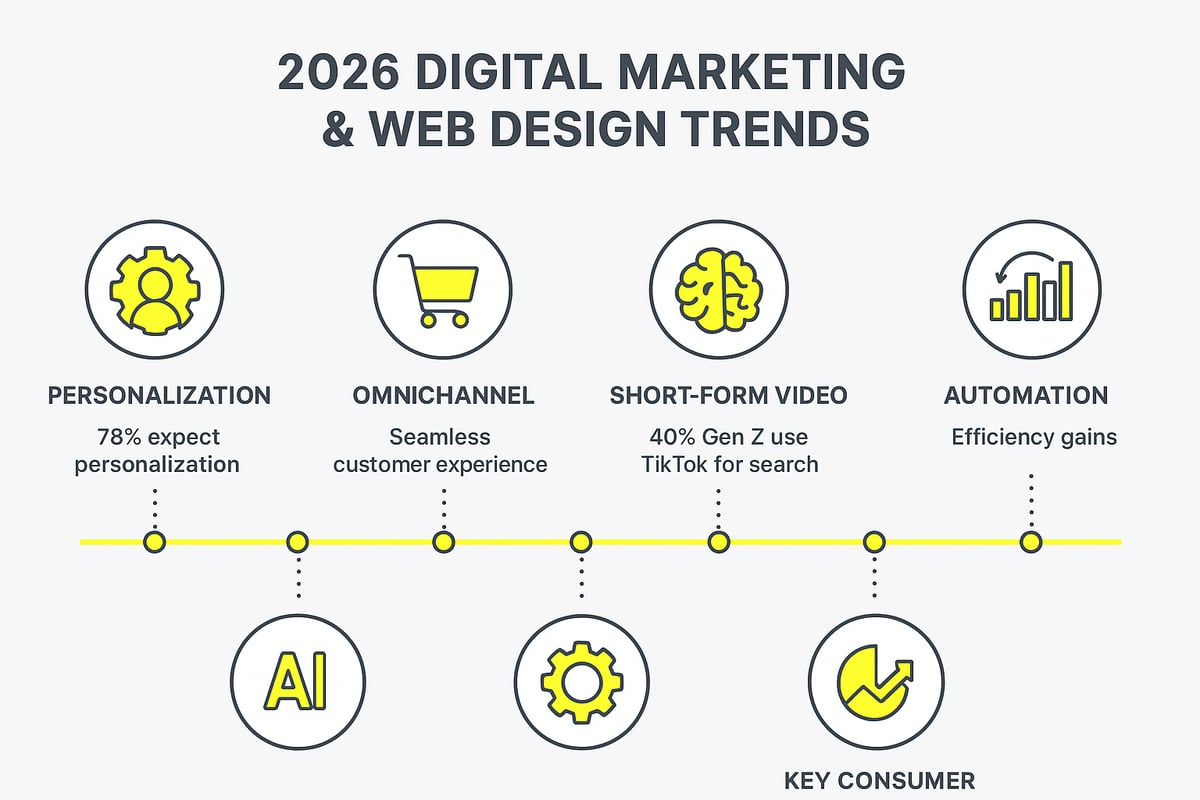
Consumer expectations for digital marketing and web design are rising fast. Personalization at scale is no longer optional—78% of shoppers expect tailored experiences, according to Salesforce (2024). Brands like Sephora and Nike excel by blending digital and physical touchpoints, enabling seamless omnichannel engagement.
Social commerce is booming. TikTok Shop and Instagram Checkout drive purchases directly from content, turning inspiration into action instantly. However, new privacy regulations like GDPR updates and Apple’s iOS changes mean brands must be transparent, building trust while using data responsibly.
Consumers crave instant gratification. Google reports a surge in micro-moments where users expect answers, products, or solutions now, especially on mobile. To thrive, brands need to deliver relevant content and frictionless experiences at every step.
Emerging Platforms and Channels
The digital marketing and web design space is being redefined by new platforms. Short-form video is the star, with TikTok, Instagram Reels, and YouTube Shorts capturing attention and driving conversions. In fact, Short-Form Video's Impact on Digital Marketing illustrates how brands in fashion and beauty see higher engagement through quick, authentic video content.
Gen Z’s search habits are shifting, as 40% now use TikTok as a primary search engine (Google, 2023). Voice and visual search are also gaining ground, requiring brands to optimize content for new discovery methods.
Messaging apps and conversational commerce are on the rise. WhatsApp and Facebook Messenger bots offer personalized recommendations and 24/7 support, making shopping more interactive and convenient.
AI and Automation in Marketing
AI is transforming digital marketing and web design by making campaigns smarter and more efficient. Leading fashion and beauty brands use AI-powered ad targeting to reach the right audiences with personalized creative. H&M’s chatbot and Sephora’s virtual artist offer real-time assistance and product guidance, enhancing customer journeys.
Predictive analytics tools help map out customer paths, allowing brands to anticipate needs and deliver relevant offers. To implement, start by:
- Identifying high-impact marketing tasks for automation
- Selecting AI tools aligned with your goals
- Integrating chatbots or virtual assistants into your ecommerce site
- Testing and refining automated workflows for optimal results
Key Takeaways for Brands
To win in digital marketing and web design in 2026, brands must:
| Priority | Action Step | Example Brand |
|---|---|---|
| Adaptability | Embrace new platforms and trends quickly | Nike |
| Data-Driven Decisions | Use analytics to guide every strategy | Glossier |
| Invest in Skills/Tech | Upskill teams, adopt AI and automation tools | Sephora |
Success requires flexibility, reliance on data, and continual investment in new skills and technologies. Brands that champion these principles will lead the market, while others risk falling behind.
Web Design for 2026: UX, UI, and Conversion Optimization
Creating standout digital marketing and web design is mission-critical for ecommerce brands in 2026. The competition is fierce, and user expectations are higher than ever. Success depends on blending cutting-edge technology with user-centric creativity.
Principles of High-Converting Web Design
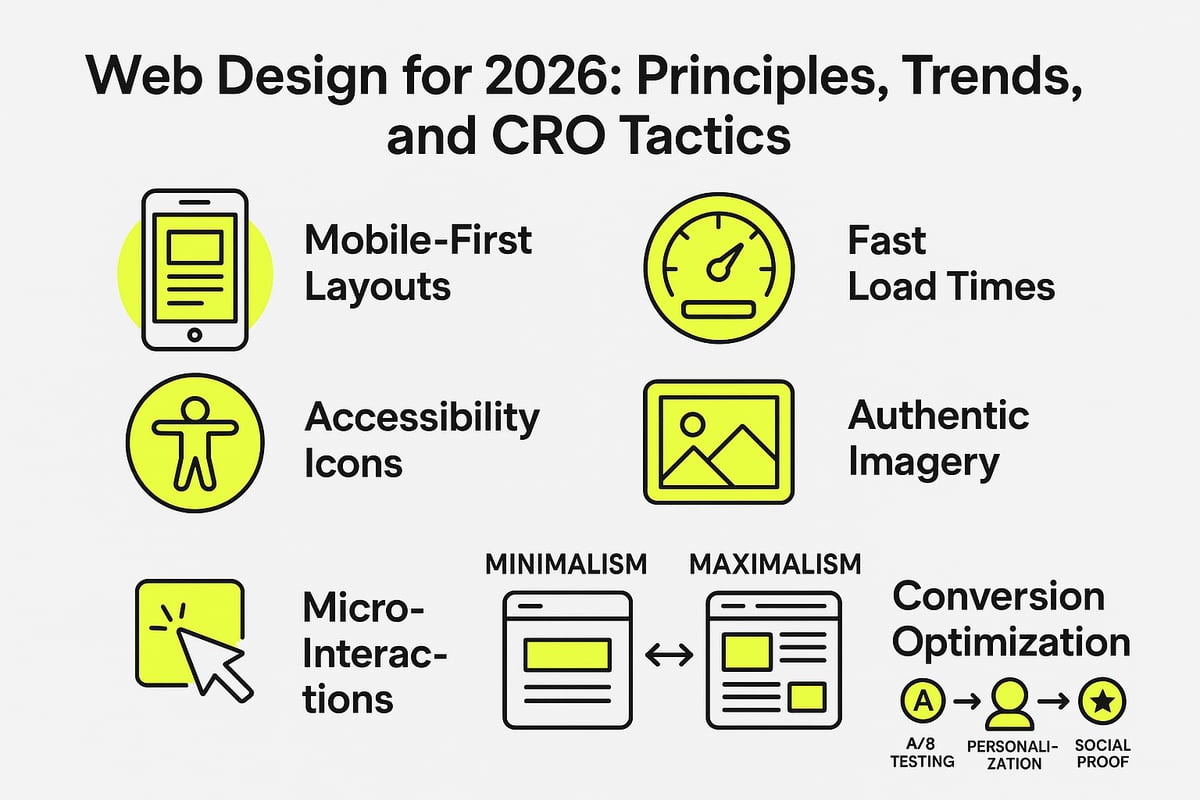
Modern digital marketing and web design start with mobile-first thinking. Over 60% of ecommerce sales now happen on mobile devices, according to Statista 2025. Responsive layouts ensure every visitor gets a seamless experience, whether browsing on a phone or desktop.
Speed is non-negotiable. Akamai’s research shows that a one-second delay in page load time can reduce conversion rates by up to 20%. Brands like ASOS and Gymshark invest heavily in image optimization and lightweight code to keep load times under two seconds.
Accessibility and inclusivity are no longer optional. Legal regulations require brands to make sites usable for everyone. Glossier’s site, for example, features clear navigation, high-contrast text, and alt text for images, making it accessible to all users.
| Principle | Impact on Results |
|---|---|
| Mobile-first design | Higher conversion rates |
| Fast load times | Lower bounce rates |
| Accessibility | Broader reach |
Prioritizing these fundamentals sets the stage for digital marketing and web design success.
Visual Trends and Brand Storytelling
In 2026, authentic imagery and video drive engagement. User-generated content and lifestyle photography dominate fashion and beauty brand sites, helping shoppers relate to real people and experiences.
Micro-interactions—such as animated buttons or subtle hovers—add delight and keep users engaged. Brands like Everlane use these to guide users through product discovery without overwhelming them.
Design trends are split between minimalism and maximalism. Minimalism, with clean lines and ample white space, works well for luxury and wellness brands. Maximalism, bold colors, and expressive fonts are trending in the fashion and lifestyle sectors, giving brands unique voices.
Storytelling is woven throughout site design. Home and living brands like Made.com use video tours and customer stories to build trust and showcase products in real environments.
Embracing these visual trends helps digital marketing and web design connect emotionally with customers.
Conversion Rate Optimization (CRO) Tactics
Improving conversions is an ongoing process. Leading health and wellness brands run A/B tests on landing pages—testing headlines, images, and calls-to-action—to identify what resonates with their audience.
Personalization widgets and dynamic content adapt to user behavior, showing relevant products or offers. Social proof, such as reviews and influencer endorsements, builds trust quickly. A case study from a wellness brand saw a 25% lift in sales after adding real-time customer ratings.
For a deep dive into proven CRO tactics and real-world results, explore these conversion rate optimization strategies.
Effective CRO combines data analysis, creative testing, and user feedback, making it a cornerstone of digital marketing and web design.
Integrating Performance and Brand
Balancing aesthetics with performance is key. Allbirds, for instance, seamlessly blends visually appealing design with fast load times and clear calls-to-action, resulting in both strong branding and high conversions.
Design decisions should always align with performance metrics. Use tools like Google Lighthouse and Hotjar to track user behavior and identify design improvements that support business goals.
Brand identity should never come at the expense of usability. Consistent typography, color schemes, and imagery create memorable experiences, but every element must serve the user journey.
Integrating performance with brand ensures digital marketing and web design deliver both immediate results and long-term loyalty.
Step-by-Step: Designing a High-Performing Ecommerce Site
Building a high-converting ecommerce site requires a systematic approach:
- Audit your current site for UX bottlenecks using analytics and heatmaps.
- Map user journeys to spot friction points, such as complicated checkouts or unclear navigation.
- Implement mobile-first layouts and optimize all images and scripts for fast loading.
- Add CRO tools to test landing pages, personalize content, and collect real-time data.
- Gather user feedback through surveys and reviews, then act on insights to refine the site.
Each step strengthens the foundation of your digital marketing and web design, positioning your brand to adapt and thrive.
Building a Future-Proof Digital Marketing Strategy
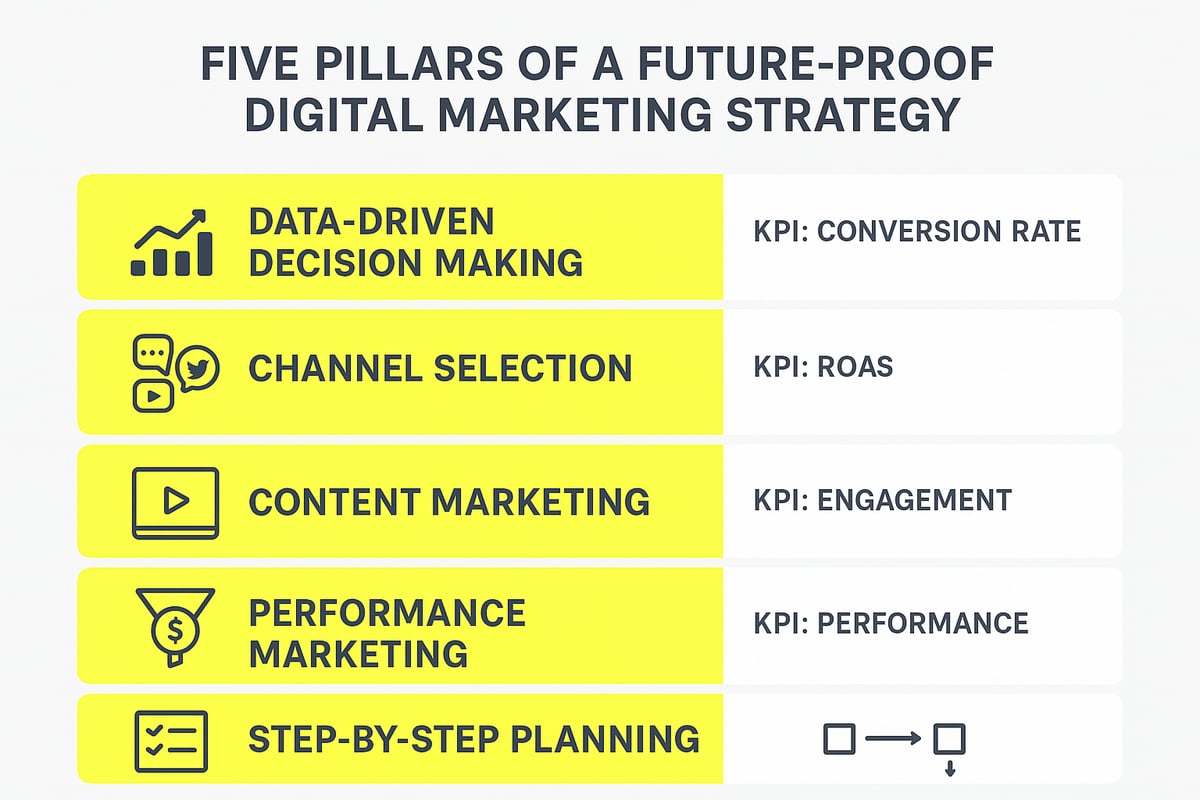
Future-proofing your digital marketing and web design approach is essential as the landscape shifts rapidly. Brands that lead in 2026 will master data, channel selection, content, and performance, staying agile in a competitive market.
Data-Driven Decision Making
A future-proof digital marketing and web design strategy starts with actionable data. Advanced analytics tools like GA4, heatmaps, and session recordings provide granular insights into user behavior. Leading brands, such as ASOS and Glossier, track KPIs like conversion rate, ROAS, and customer lifetime value to guide every move.
Data privacy is now a priority. With evolving regulations, setting up privacy-compliant tracking is non-negotiable. Attribution models have grown more sophisticated, helping brands understand which touchpoints drive results across channels.
For more on how analytics and AI are reshaping the landscape, see Data-Driven Innovation in Digital Marketing.
| Key KPI | What It Measures | Example Benchmark |
|---|---|---|
| Conversion Rate | % of visitors who buy | 2-5% (fashion/lifestyle) |
| ROAS | Return on ad spend | 4x+ (top performers) |
| CLV | Customer lifetime value | $300+ (premium brands) |
Channel Selection and Budget Allocation
Choosing the right mix of channels is vital for digital marketing and web design success. Brands must evaluate paid search, paid social, SEO, and email, then align investments with business goals. For example, a lifestyle brand might allocate 40% of its budget to Meta and TikTok, 30% to Google Ads, and the rest to email and SEO.
Multi-touch attribution reveals how each channel contributes to the user journey. Health and wellness brands often see higher conversions when combining Meta retargeting with influencer partnerships. Budgeting for experimentation—such as testing new platforms like Pinterest or Snapchat—keeps brands ahead of the curve.
Regularly reviewing channel performance ensures resources fuel the most effective strategies.
Content Marketing and Storytelling
Compelling content is the engine of digital marketing and web design. In 2026, value-driven content—think how-to videos, user-generated reviews, and behind-the-scenes stories—builds lasting relationships. Fashion brands excel by leveraging TikTok and Instagram Reels for video-first storytelling.
SEO remains crucial. Semantic search, voice optimization, and zero-click results are shaping how content is discovered. For instance, home and living brands use FAQ-rich content and schema markup to capture voice searches.
Table: Types of High-Performing Content
| Content Type | Channel | Example Brand |
|---|---|---|
| Tutorials | YouTube, TikTok | Glossier |
| UGC | Instagram, Reels | Allbirds |
| Behind-the-scenes | Stories, Blog | Everlane |
Performance Marketing in Action
Performance marketing is about measurable results. Leading brands run full-funnel campaigns across Meta, TikTok, and Google, blending awareness, consideration, and conversion tactics. For example, a fashion retailer increased ROAS by 7x by combining lookalike audiences on Meta with TikTok video ads.
Retargeting is essential. Brands like Sephora use dynamic product ads to re-engage shoppers, while health brands employ abandoned cart flows for email. Testing and optimizing campaigns weekly ensures continuous growth.
CRO tools, such as A/B testing landing pages, help identify the highest-converting creative and messaging.
Step-by-Step: Crafting Your 2026 Digital Marketing Plan
A systematic approach keeps digital marketing and web design strategies agile and effective:
- Define detailed target audiences and personas using analytics.
- Audit current marketing channels and performance data.
- Prioritize channels based on ROI and audience fit.
- Develop content and creative assets tailored to each platform.
- Launch campaigns, track KPIs, and optimize based on real-time feedback.
Brands that revisit their plans quarterly, invest in ongoing training, and stay open to new tech consistently outperform the competition. The key to future-proofing lies in adaptability, data, and relentless optimization.
Integrating AI, Automation, and Personalization for Scale
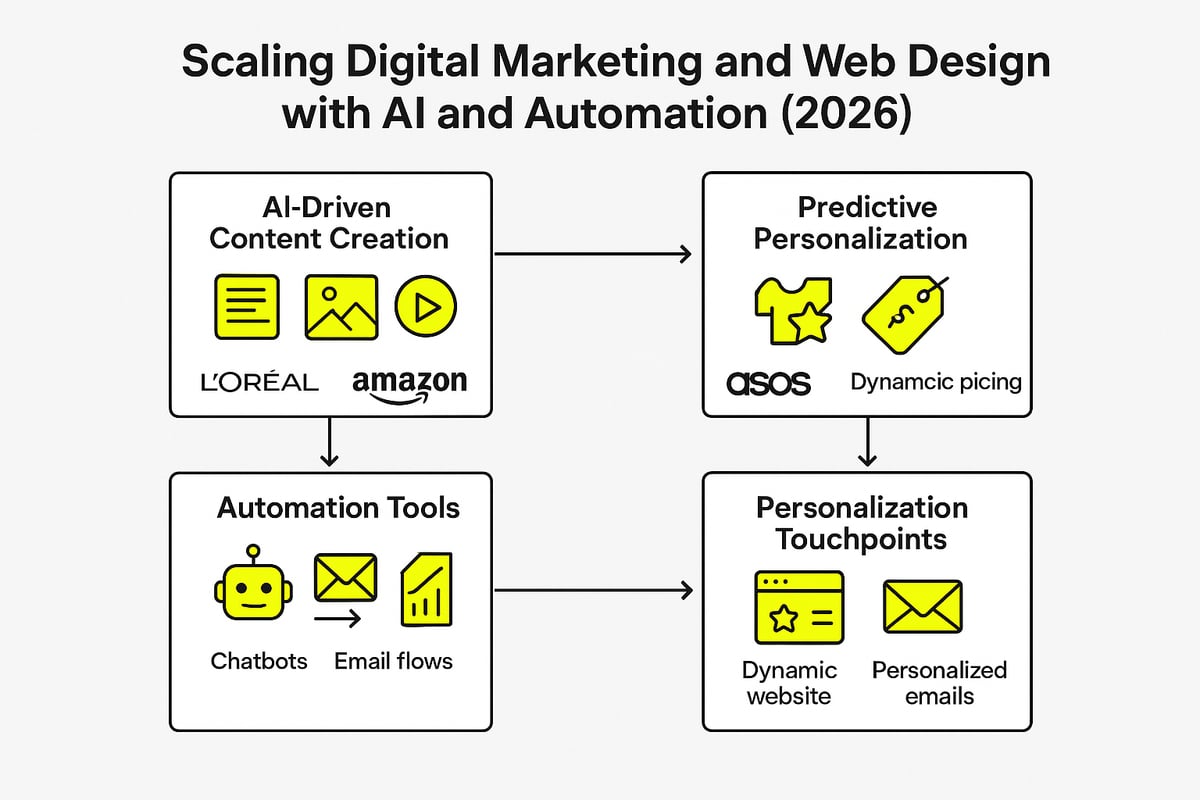
Adapting to rapid changes in digital marketing and web design is essential for brands aiming to scale in 2026. AI, automation, and personalization are now at the core of high-performing strategies. Brands that master these technologies not only boost efficiency but also deliver superior customer experiences that drive loyalty and revenue.
Harnessing AI for Marketing and Design
AI is revolutionizing digital marketing and web design by automating content creation and enabling deep personalization. Brands like L’Oreal have introduced AI-powered virtual try-ons, letting shoppers preview products in real time. Amazon and ASOS use predictive personalization, analyzing browsing and purchase data to recommend products and set dynamic prices.
In customer service, H&M’s AI chatbot assists with style advice and order tracking, while Sephora’s virtual artist uses AI to match beauty products to individual preferences. These innovations not only enhance user experience but also streamline operations.
To learn more about practical applications, check out this detailed guide on Using AI in ecommerce marketing, which explores real-world strategies for integrating AI in digital marketing and web design.
Workflow Automation and Efficiency
Automation tools are transforming how teams execute digital marketing and web design campaigns. Platforms like Klaviyo automate email segmentation, scheduling, and personalized flows. Zapier connects apps to automate repetitive tasks, such as syncing leads from landing pages to CRM systems.
Campaign management is now more efficient with automated reporting and scheduling tools. For example, a home and living brand automated their abandoned cart recovery using Shopify and Klaviyo integrations, leading to a 20% revenue uplift from previously lost sales.
By streamlining workflows, brands reduce manual errors, free up team resources, and focus on creative and strategic growth areas within digital marketing and web design.
Personalization at Every Touchpoint
Personalization is no longer limited to first-name email greetings. Leading brands leverage AI to deliver dynamic website content that adapts to user behavior in real time. For example, displaying recently viewed products or tailored offers based on browsing history.
Email flows are also more sophisticated. Beauty brands now send browse abandonment sequences and product recommendations triggered by user activity, resulting in higher engagement and conversion rates. A wellness brand boosted average order value by 18% using personalized bundles and timed incentives.
Effective personalization across digital marketing and web design creates memorable, relevant experiences that turn visitors into loyal customers.
Step-by-Step: Implementing AI and Automation
Implementing AI and automation in digital marketing and web design requires a structured approach:
- Identify repetitive or time-consuming tasks suitable for automation.
- Select AI-powered tools that align with your business goals and existing tech stack.
- Integrate these solutions with platforms like Shopify, Klaviyo, or your CMS.
- Test workflows with small segments, monitor performance, and refine based on results.
Continuous optimization ensures your digital marketing and web design remain agile and scalable, ready for the evolving demands of 2026.
Measuring Success: Analytics, KPIs, and Continuous Optimization
To thrive in digital marketing and web design, brands must measure what truly matters. The landscape in 2026 demands sophisticated analytics, clear KPIs, ongoing testing, and a relentless focus on optimization. Here is how leading brands are turning data into growth.
Setting Up Advanced Analytics
Modern digital marketing and web design strategies start with robust analytics. Implement Google Analytics 4 (GA4) for event-based tracking, capturing essential actions like add-to-cart, checkout, or video plays.
Server-side tracking solutions help brands like Glossier maintain privacy compliance while collecting accurate data. Integrate heatmaps and session recordings to visualize user journeys and uncover friction points.
For privacy, ensure GDPR and CCPA compliance by anonymizing data and offering clear consent management. Home and living brands often use tools like Hotjar to combine behavioral data with direct user feedback, optimizing both digital marketing and web design experiences.
Key Performance Indicators for 2026
Success in digital marketing and web design hinges on tracking the right KPIs. Core metrics include:
| KPI | Why It Matters | Example Benchmark |
|---|---|---|
| Conversion Rate | Measures site effectiveness | 2-5% (Ecommerce) |
| ROAS | Gauges ad spend efficiency | 4x-7x (Fashion) |
| Customer Lifetime Value | Informs retention strategies | $250+ (Beauty) |
| Engagement Metrics | Tracks user interaction | 3+ min/session |
| Channel-specific KPIs | Optimizes campaigns | 20%+ open rate (Email) |
Fashion brands leveraging Performance marketing for ecommerce report up to 7x ROAS and 50% higher conversion rates by aligning KPIs with business goals.
Continuous Testing and Iteration
Continuous improvement is vital for digital marketing and web design. Brands like Allbirds run structured A/B and multivariate tests on landing pages, measuring uplift in real time.
Use heatmaps and session replays to spot where users drop off. For example, a health and wellness retailer increased conversions by 22% after identifying and fixing checkout friction points.
Iterate based on test results, rolling out changes that deliver measurable gains. This approach keeps digital marketing and web design strategies agile and responsive.
Leveraging Customer Feedback and Social Listening
Direct feedback is a goldmine for digital marketing and web design optimization. Collect user insights through post-purchase surveys, product reviews, and Net Promoter Score (NPS) surveys.
Social listening tools monitor brand sentiment across platforms such as Instagram and TikTok, alerting teams to shifts in perception. Beauty brands often adapt campaigns in response to real-time feedback, boosting customer trust and loyalty.
Combining quantitative analytics with qualitative feedback ensures a holistic view of performance in digital marketing and web design.
Step-by-Step: Building a Culture of Optimization
To embed optimization in your digital marketing and web design efforts, follow these steps:
- Define clear success metrics and set benchmarks.
- Set up automated reporting dashboards for all channels.
- Schedule regular performance reviews involving cross-functional teams.
- Act on insights by iterating campaigns, design, and UX based on data and feedback.
By making optimization an ongoing habit, brands in every sector—from fashion to home and living—achieve steady, compounding growth through digital marketing and web design.
Preparing for the Next Wave: Future-Proofing Your Brand
Staying ahead in digital marketing and web design requires more than just reacting to trends. Brands must anticipate change, build agile teams, and embed sustainability and localization at their core. Here’s how to future-proof your brand for the next wave of digital evolution.
Anticipating Technological Shifts
The next era of digital marketing and web design will be defined by rapid advancements in technology. Brands are already experimenting with Web3 experiences, such as decentralized loyalty programs and NFT-based memberships in fashion and lifestyle sectors. AR/VR is transforming online shopping—Warby Parker’s virtual try-ons and IKEA’s AR-powered home previews are now industry benchmarks.
5G enables faster, richer content delivery, opening doors for interactive storytelling and immersive product demos. AI-driven personalization is now a baseline expectation. For deeper insight into how AI is shaping the future of web experiences, explore AI-Powered Personalization in Web Design.
To stay relevant, brands must regularly audit emerging tech, pilot new experiences, and measure real user impact.
Building Agility into Your Team and Processes
Success in digital marketing and web design hinges on the agility of your team. Upskilling in AI tools, advanced analytics, and design systems is now a necessity. Leading ecommerce brands like Glossier and Gymshark have adopted agile marketing methodologies, enabling rapid iteration and cross-functional collaboration.
Organize regular knowledge-sharing sessions and empower team members to experiment with new platforms. Building a culture of continuous learning and adaptation ensures your digital marketing and web design strategies remain future-proof.
Sustainability and Ethical Marketing
Sustainability is now a core differentiator in digital marketing and web design. Eco-friendly web design, including low-carbon sites and green hosting, is gaining traction. Beauty brands like Lush and The Body Shop lead with transparent, values-driven campaigns that resonate with conscious consumers.
Prioritize accessibility, inclusivity, and transparency in all digital touchpoints. According to Nielsen, 70% of consumers prefer to buy from sustainable brands. Aligning digital marketing and web design with ethical practices not only meets legal requirements but also builds lasting trust.
Expanding Globally and Locally
Global expansion is accelerating, but success depends on localization. Shopify Plus brands like Allbirds and Gymshark have thrived by offering multi-language, multi-currency ecommerce experiences. Localized content and campaigns drive up to 80% of ecommerce sales in new markets.
Navigating compliance and cultural nuances is critical. Invest in translators, local payment integrations, and region-specific marketing to ensure your digital marketing and web design resonate with every audience.
Step-by-Step: Creating a Future-Proof Roadmap
To make your digital marketing and web design strategy resilient, follow these action steps:
- Audit your current tech stack and team skills.
- Identify and evaluate emerging trends most relevant to your sector.
- Develop agile processes for rapid testing and adaptation.
- Invest in sustainability and ethical marketing initiatives.
- Plan for international growth, including localization and compliance.
By implementing this roadmap, brands can adapt confidently to industry shifts, ensuring their digital marketing and web design strategies are built for long-term growth.
As you look ahead to 2026, it’s clear that success in digital marketing and web design means blending creativity with data-driven strategies. If you’re ready to future-proof your ecommerce brand—with expert help navigating everything from AI-powered personalization to performance marketing across every major channel—you don’t have to do it alone. At Good Karma Agency, we act as an extension of your team, helping you turn ambitious ideas into measurable growth. Let’s chat about how you can stand out, adapt quickly, and achieve lasting results in the evolving digital landscape. Contact us


